
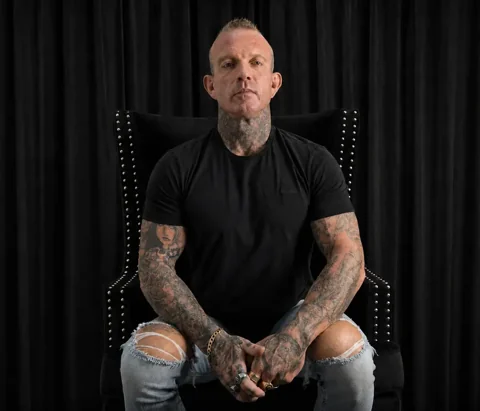
Pete Bates
Lived experience of offending, consequences and rebuilding informs Pete’s understanding of harmful behaviour. His work names the pattern without moving responsibility away from the person causing harm.
Meet PeteWomen’s Safety & Pattern Help
For women living with coercive control, including after separation. Recognise what is happening. Put the context back. Find your next step.
Need urgent support? Safety comes first.The PBP method · Put the context back
An isolated incident can hide the pattern. We look at what repeated, what you adapted around it and the context outsiders often misread — including post-separation abuse, children used as leverage and victim misidentification.
Recognition. Language. Personal interpretation.
Recognise the pattern for free. Use the guide to explain it. Choose private support when you need your own history read or discussed.

Something feels wrong. You need words for it.
Start recognising control, consequences and the changes you make to avoid his reaction.

You know what happened. Keep the context in the account.
Worked examples and short worksheets to connect what he did, what repeated and what you changed around it.

Your history. Read for what connects it.
Pete personally reads the material you provide around one focused pattern or question and returns the connected structure in writing.

When you need a conversation, with room to clarify.
A private 30-minute call with Pete to discuss a focused pattern, ask questions and work towards clearer language.
Recognition is free. Personal interpretation is paid. Immediate danger is routed to real-world support.
Prices in AUD. Service boundariesFree Pattern Library
A separate path
Practical guides for starting again, building daily structure and taking responsibility at home. Begin with The Rebuild Starting Point, free.
Explore RebuildFor organisations & events
Lived-experience speaking and public education with Pete, or Pete and Belinda by brief. Organisation, workforce and youth-sector enquiries are scoped to the audience.
Speaking & organisationsThe people behind the work
Lived experience of offending, consequences and rebuilding informs Pete’s understanding of harmful behaviour. His work names the pattern without moving responsibility away from the person causing harm.
Meet Pete
Belinda brings the focus back to women’s ordinary lives: the invisible rules, the needs they stop voicing and the adaptations outsiders miss when they only look at a woman’s reaction.
Meet Belinda